March 20, 2026 Reflection
This week we had presentations from half of our inquiry project groups, and learned about our digital footprint and how targeted ads actually work.
The four projects that I watched this week are Pod 3: How can fitness technology and activity tracking apps promote healthy habits or unhealthy competition and anxiety among students?, Pod 4: Old School vs. New School Projects, Pod 2: Using Stop-Motion to Support Multimodal Learning, and Pod 15: Can teachers use Slido as an effective way to engage and help students learn?
All 4 were quite interesting and relevant to life as a teacher, although I don’t see myself using some of the tech presented in my classroom. I found Pod 4’s discussion of old school versus new school projects particularly interesting, although many of their ideas were things that I had already been thinking about through my own experiences. I’ve found that when students are using computers, they tend to need a lot more supervision than paper, as there are much more distractions, and students are more likely to switch tabs at every opportunity to play games or message their friends.
From the lesson on web tracking, I feel that I learned a fair bit this session about online privacy, and some of the myths that we have heard. This lesson highlighted some misinformation that has become widely spread online and in person about how major companies may or may not be profiling us to sell more stuff.
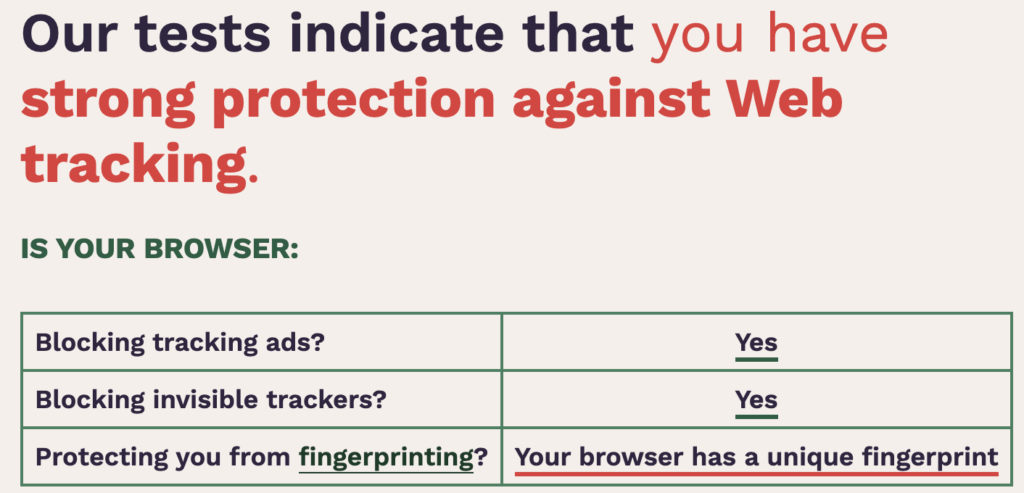
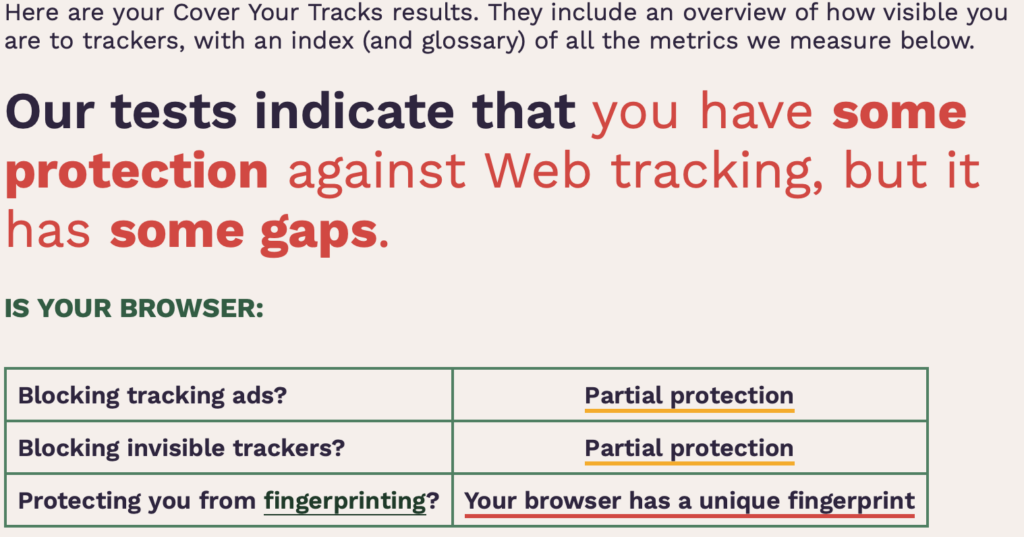
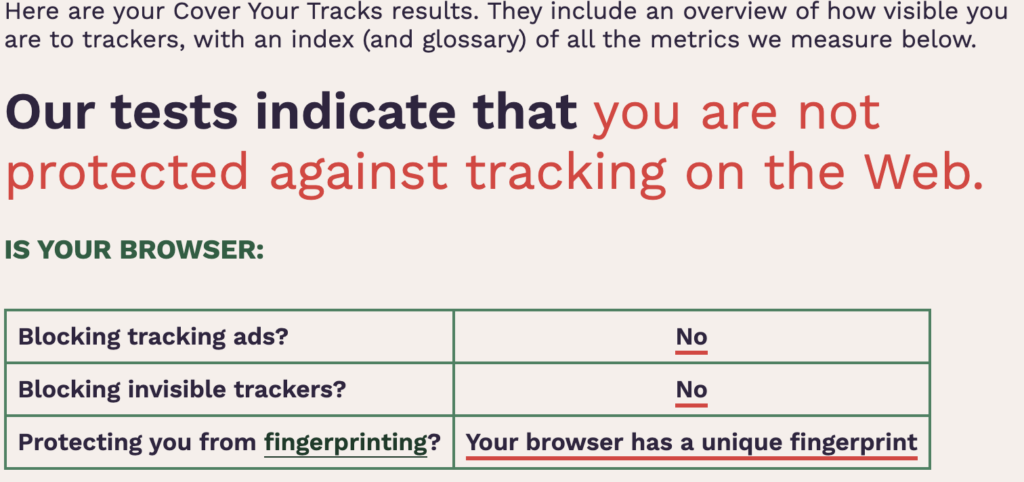
Testing each of my browsers with Electronic Frontier Foundation (EFF)’s Cover Your Tracks browser test showed that Firefox provided the strongest protection, while Safari provides some protection, and Chrome provides none.